
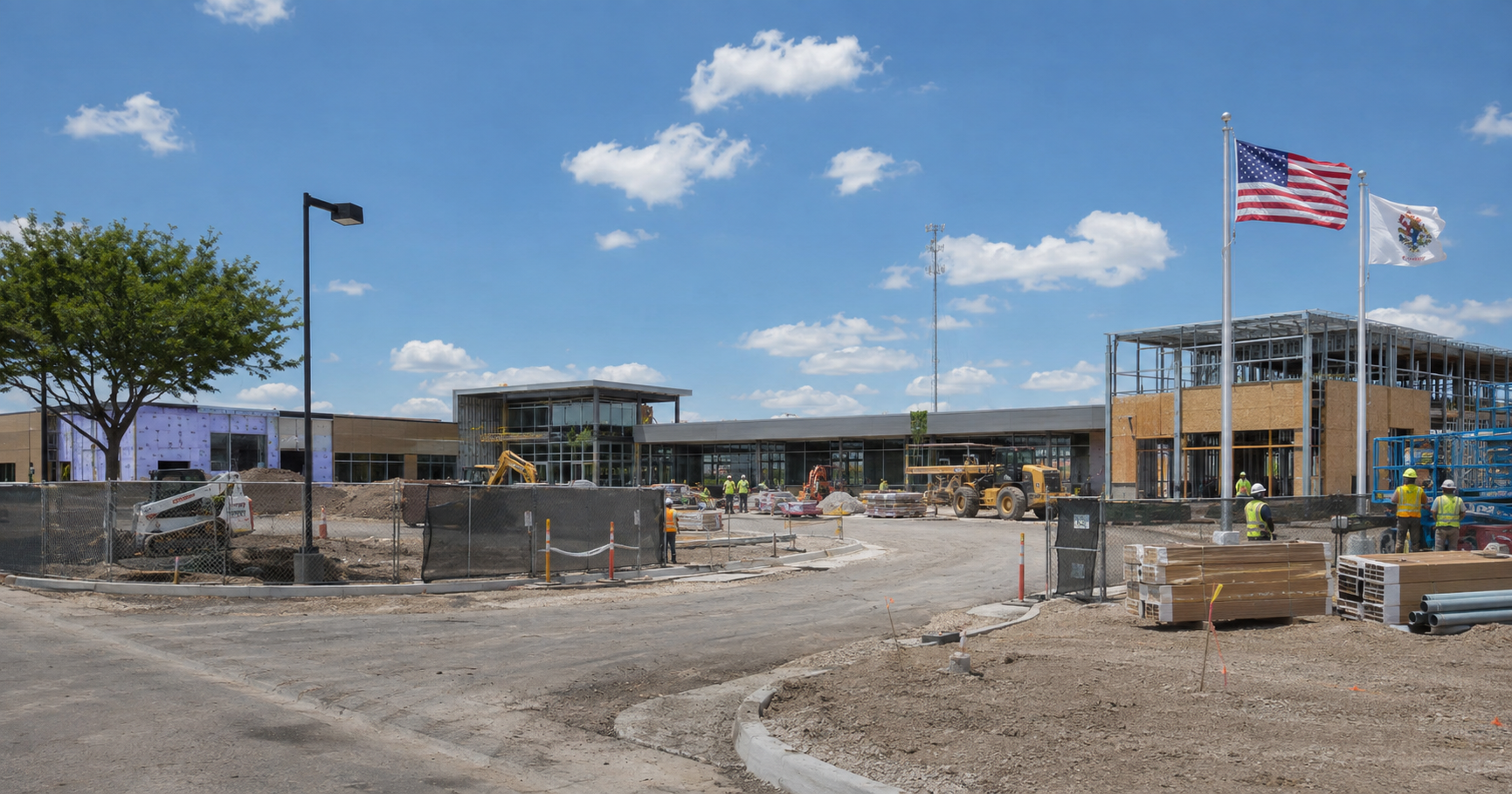
Vernon Hills Police Campus Redevelopment
Vernon Hills is moving forward with a major redevelopment project that will unify and modernize its existing police facilities into a cohesive campus. The initiative aims to improve functionality, enhance public access, and better support long-term operational needs.
Project Overview and Existing Conditions
The Vernon Hills Police Department currently operates out of two separate buildings located at 740 and 754 Lakeview Parkway. The original police station was constructed in 1992, while the second building, an office structure, was acquired approximately 20 years ago.
Officials have determined that the current setup no longer meets the needs of the department or the community. Rather than continuing with incremental fixes, the village has opted for a comprehensive redevelopment approach.
Design Vision and Campus Integration
The Daily Herald reports that the project focuses on physically and functionally connecting the two buildings to create a unified police campus.
Key design elements include:
- A new glass-front main entrance to create a clear and welcoming public access point
- A centralized lobby for visitors
- An indoor parking garage located at the rear of the site
- An open courtyard connecting the two buildings
- Improved workspaces and dedicated training areas
The goal is to create a facility that is both operationally efficient and accessible to the public, while supporting modern policing needs.
Project Cost and Scope Adjustments
The estimated cost of the redevelopment has increased from $32.5 million to approximately $40 million.
Several factors contributing to the cost increase include:
- Relocation of existing cell towers and underground utilities between the buildings
- Site work and infrastructure adjustments
- Compliance with updated state energy codes
- Reconfiguration of interior spaces, including relocating restrooms
- Installation of a centralized HVAC system
- Redesign of the building’s front entrance
- Ongoing increases in construction costs
Utility relocation and site-related work alone are expected to add nearly $3 million to the total project cost.
Planning Process and Timeline
The project has now completed the design development phase, following a detailed planning process that included input from more than half of the department’s staff.
Village board approval of recommendations from the advisory planning and zoning commission marks a key milestone.
Next steps include:
- Preparation of detailed construction drawings
- Issuance of documents for competitive bidding
- Contractor selection and final cost validation
Once complete, the facility is expected to serve the community for approximately 40 years.
Operational Improvements and Long-Term Goals
The redevelopment is designed to address both current and future operational needs. With communications services having transitioned to the LakeComm countywide 9-1-1 system, the village saw an opportunity to rethink how the space is used.
The project emphasizes:
- Improved workflow between departments
- Enhanced training capabilities
- Better public-facing spaces
- Long-term durability and adaptability
By consolidating operations into a unified campus, the village aims to improve efficiency and service delivery.
Construction Trades Involved
As the project moves into detailed design and pre-construction planning, the primary trades involved include:
- Architectural and design teams
- Structural and civil engineering consultants
- Mechanical, electrical, and plumbing engineers
- Site and utility coordination specialists
- Planning and zoning consultants
- Cost estimation and construction management professionals
As the project advances into construction, additional trades will be engaged for structural modifications, building connections, interior renovations, and system upgrades.
Closing Thoughts
The Vernon Hills police campus redevelopment represents a strategic investment in public safety infrastructure. By connecting two aging buildings into a modern, unified facility, the project aims to improve functionality, enhance public access, and support long-term community needs.
For construction professionals, the project highlights the complexities of adaptive reuse, phased redevelopment, and infrastructure coordination within an active operational environment.
Judy Lamelza
Editor-in-Chief