
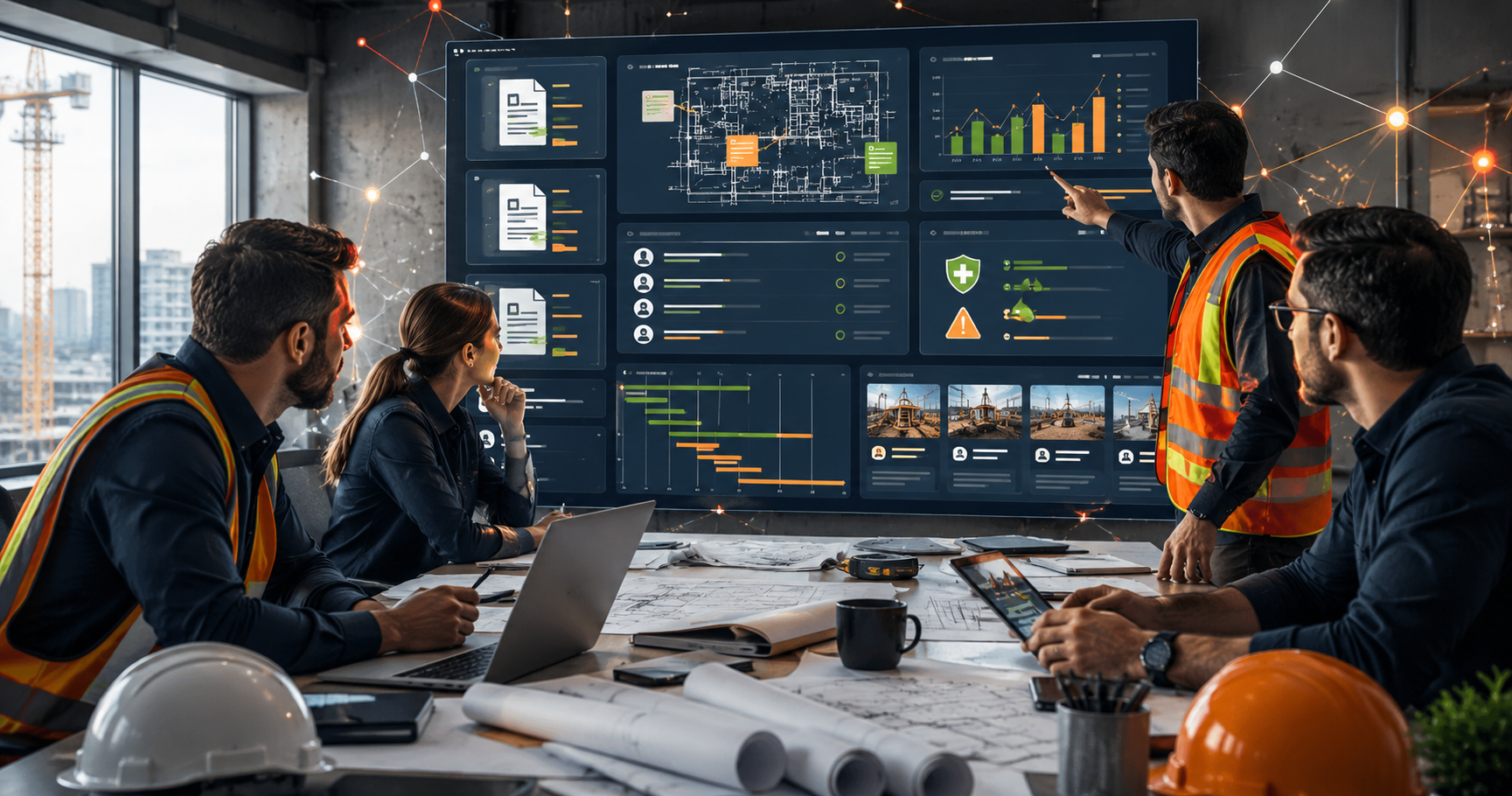
7 Practical Ways Construction Companies Are Using AI Right Now
AI gets talked about like it is some massive future shift that construction companies need to prepare for someday.
That's not really the full story.
AI is already being used in construction, but the most useful examples are not always the flashiest ones. For most contractors, the first real wins are not robots building jobsites or software replacing people. They are smaller, practical improvements that save time, reduce manual work, organize information, and help teams make better decisions faster.
That matters because construction is already busy enough. There are estimates to review, documents to read, RFIs to answer, schedules to manage, safety risks to watch, owners to update, bids to qualify, and opportunities to track.
AI will not fix all of that by itself. But when it is used properly, it can help a construction business work with more focus and less wasted time.
Here are seven practical ways construction companies are using AI right now.
1. Summarizing Project Documents
Construction teams deal with a lot of information. Specs, drawings, addenda, bid packages, meeting notes, site reports, contracts, and emails can pile up fast.
AI can help by summarizing long documents, pulling out important dates, identifying action items, and turning dense information into a clearer starting point. Instead of reading through a long document just to figure out what changed, a team can use AI to create a summary, then review the source material to confirm the details.
That last part matters. AI shouldn't be treated as the final authority. Someone still needs to verify the documents. But as a first pass, AI can help teams move faster and avoid missing obvious items buried in long files.
2. Supporting Estimating and Scope Review
AI is starting to show real value in preconstruction and estimating support.
That doesn't mean AI should “do the estimate.” Estimating still requires experience, trade knowledge, local pricing, subcontractor input, and judgment. But AI can help with the work around the estimate.
For example, it can help organize scope notes, summarize addenda, compare bid requirements, create review checklists, draft clarification questions, and flag items that may need a closer look. It can also help estimators prepare a cleaner handoff for internal review.
For busy estimating teams, that kind of support can matter. The goal is not to replace the estimator. The goal is to reduce the time spent sorting through information so the estimator can spend more time thinking about the job.
3. Drafting RFIs, Emails, and Follow-Ups
One of the easiest ways for construction companies to start using AI is with writing.
AI can help draft RFIs, owner updates, subcontractor follow-ups, proposal cover notes, internal summaries, and customer emails. It can take rough notes and turn them into a clearer message. It can also help adjust tone, shorten long emails, or make a technical message easier to understand.
This is useful because a lot of construction communication is repetitive but still important. A rushed or unclear message can create confusion, while a better-written message can save time and reduce back-and-forth.
The key is to use AI as a drafting assistant, not an automatic sender. A person still needs to review the message, check the facts, and make sure it fits the situation.
4. Improving Scheduling and Risk Awareness
Schedules are one of the hardest parts of construction to manage because one delay can affect many other parts of the job.
AI can help teams look for schedule risks, possible conflicts, missing tasks, and patterns that may lead to delays. Some tools can compare planned progress against actual progress, summarize schedule changes, or help teams understand where attention is needed.
This is especially useful when the project team is dealing with a lot of moving parts. AI can help point to where there may be a problem, but it still takes experienced people to decide what to do about it.
The best use is not “AI runs the schedule.” The better use is “AI helps the team see problems sooner.”
5. Supporting Safety and Field Operations
Safety, scheduling, field updates, time tracking, and jobsite communication are all areas where AI and automation can help construction companies get better visibility into what is happening across the business.
Some companies are using AI to review safety data, identify risk patterns, monitor jobsite conditions, and support safety planning. Others are starting with simpler improvements, such as summarizing safety reports, organizing toolbox talk topics, reviewing incident trends, or preparing jobsite checklists.
This is also where connected field and office systems matter. If job updates, safety forms, photos, time entries, scheduling changes, and crew communication are scattered across paper, texts, emails, and whiteboards, AI has less useful information to work with.
Platforms like Tradetraks are helping trade contractors bring operations, communication, safety, time tracking, and financial visibility into one connected system. That kind of structure can make a construction business easier to manage today and better prepared for smarter automation tomorrow.
The value is practical: better visibility, better preparation, and fewer things falling through the cracks.
6. Finding Better-Fit Projects and Companies
This is where AI can help on the business development and preconstruction side.
Many contractors are not short on project information. They are buried in it. Bid invites, agency alerts, owner emails, GC requests, project updates, addenda, saved searches, and lead service notifications can create a lot of noise.
AI can help sort through project and company data to surface opportunities that are more likely to fit a company’s work, market, trades, location, and past activity.
That is the idea behind DataBid’s AI-Recommended Projects. Instead of forcing users to dig through every project from scratch, AI can help bring better-fit opportunities forward so teams know where to look first.
That doesn't mean every recommendation is a perfect match. It means the first pass gets smarter. For contractors, suppliers, and business development teams, that can save time and help focus attention where it is more likely to matter.
7. Turning Company Data Into Better Decisions
Most construction companies already have valuable information inside their business. The problem is that it is often scattered across emails, spreadsheets, bid folders, project files, CRMs, accounting systems, notes, and old proposals.
AI becomes more useful when it can help organize that information and make it easier to use.
A company may be able to ask better questions, review past jobs, summarize customer history, find old project notes, identify common issues, or spot patterns in the types of work they win and lose.
This is where AI can move from being a writing tool to becoming a decision-support tool.
The companies that benefit most will likely be the ones that keep better data, clean up their processes, and teach their teams how to use AI responsibly.
The Bottom Line
AI in construction does not need to be complicated to be useful.
For most companies, the best starting points are practical: summarize documents, support estimating review, draft clearer communication, watch for schedule risks, improve safety preparation, find better-fit opportunities, and make better use of company data.
AI shouldn't replace construction experience. It should help good people move faster, stay organized, and make better decisions.
That is the real opportunity.
The construction companies that get value from AI will not be the ones chasing every new tool. They will be the ones that find a few practical use cases, test them, train their teams, and build from there.
Start small. Keep humans in control. Use AI where it saves time or improves focus.
That is where AI is actually working right now.
Jim Lamelza
Founder & CEO