
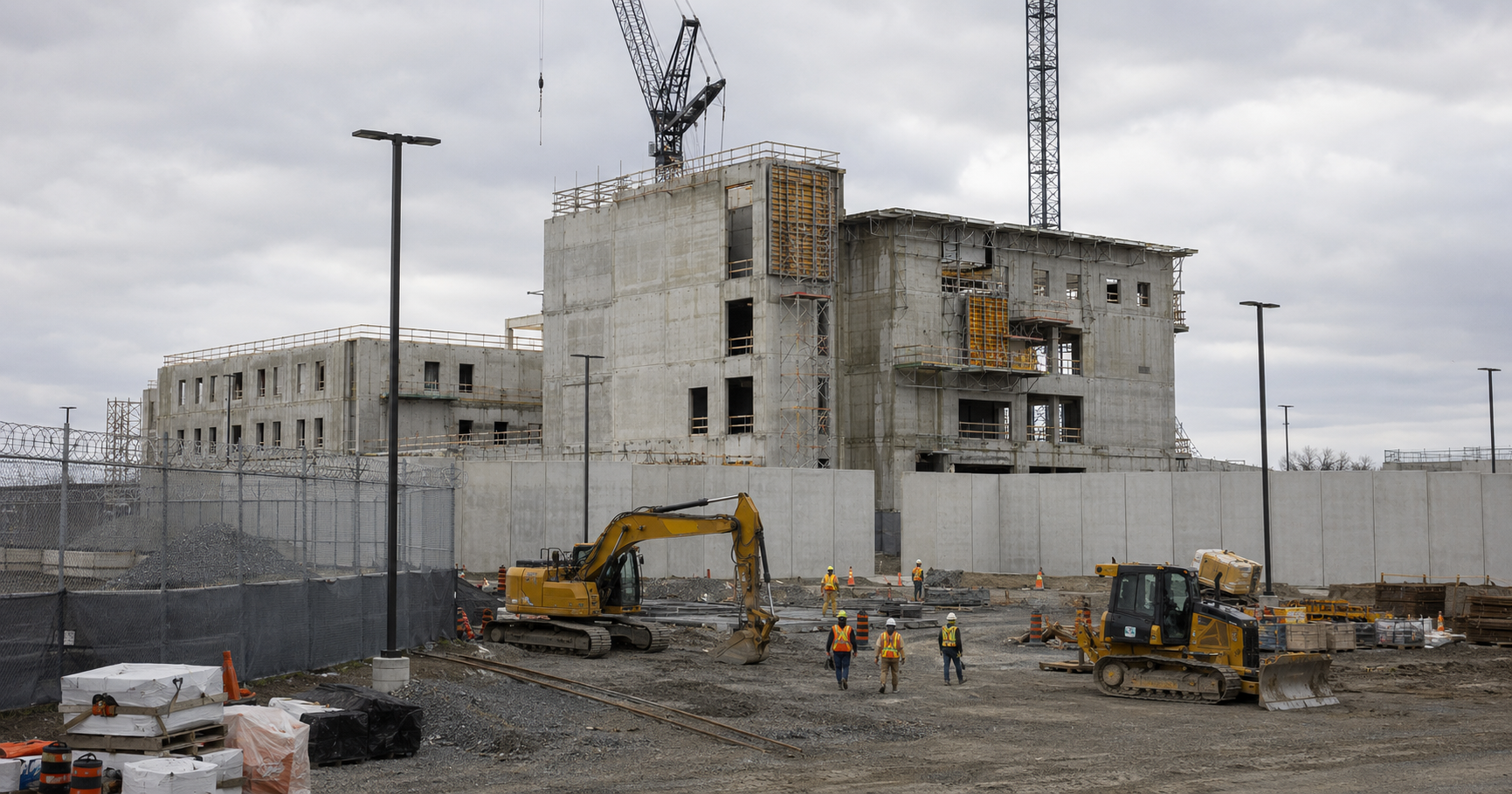
Ontario is moving forward with one of the largest correctional infrastructure programs in its history, committing $3 billion over the next decade to add 2,500 new jail beds as overcrowding across provincial institutions reaches crisis levels.
The province’s correctional system is currently operating far beyond safe capacity, with 2025 average occupancy levels reaching approximately 127 percent systemwide and some facilities exceeding 165 percent.
CBC News reports that to address these mounting pressures, Ontario’s plan includes:
- New correctional facilities
- Expansion of existing institutions
- Reopening shuttered facilities
- Modular jail construction
- Rapid-build tensile structures
- Large-scale staffing increases
Overcrowding Crisis Drives Urgent Construction
Current provincial data illustrates the growing scale of overcrowding:
- Average inmate population in 2025: 11,058
- Existing system capacity: 8,676 beds
- Overcapacity: roughly 2,000 inmates above system limits
Capacity growth over recent years:
- 2020: 80%
- 2022: 100%
- 2023: 112%
- 2024: 122%
- 2025: 127%+
This sustained growth has placed significant strain on existing infrastructure, staffing, and inmate management systems.
Multi-Phase Expansion Strategy
Ontario’s correctional expansion is structured into long-term phases.
Phase 1 (Underway Through 2032)
- 1,170 new beds
- Estimated cost: $4 billion
- Approved funding: $2.9 billion
- Includes:
- Thunder Bay Correctional Complex
- Brockville expansion
- Kemptville upgrades
- Napanee refurbishment
- Modular projects in Niagara, Milton, and Sudbury
Immediate Short-Term Capacity Additions
By late 2026, Ontario plans to add:
- 255 permanent beds through optimization projects
- 610 beds via rapid-build structures
- 1,703 additional beds through procurement revisions
Construction Methods Focus on Speed and Cost Control
To accelerate delivery while controlling costs, the province is employing multiple construction strategies:
- Modular construction systems
- Tensile membrane structures
- Traditional institutional builds
- Facility retrofits
- Adaptive reuse of former correctional sites
These approaches are intended to deliver urgently needed capacity faster than conventional large-scale prison construction alone.
Reopened and Expanded Facilities
Ontario plans to reactivate or expand sites including:
- Walkerton
- Brampton
- London-Elgin-Middlesex
- Sudbury
- Niagara
- Milton
Workforce Growth and Operational Expansion
Infrastructure expansion will also require major workforce increases. Current Plans include 700 new correctional officers in immediate phases and 2,500 new staff province-wide over broader expansion timelines.
This will create significant demand for:
- Institutional security professionals
- Facility operations staff
- Maintenance teams
- Healthcare workers
- Mechanical systems operators
Construction Trades and Infrastructure Sectors Involved
The correctional expansion will require broad industry participation, including:
- General contractors
- Modular construction manufacturers
- Concrete specialists
- Structural steel contractors
- HVAC installers
- Security systems integrators
- Electrical contractors
- Plumbing contractors
- Site development crews
- Civil engineers
Cost Scale and Long-Term Financial Impact
While the announced 10-year investment is $3 billion, long-term government planning documents suggest the province may ultimately expand nearly 6,000 beds by 2050.
Looking Ahead
Ontario’s correctional expansion program represents a major long-term construction initiative with implications far beyond corrections alone.
For contractors, engineers, suppliers, and public infrastructure professionals, this $3 billion commitment signals:
- Sustained institutional construction demand
- Modular building opportunities
- Major public procurement pipelines
- Workforce expansion
- Long-term correctional modernization
As the province moves from planning into execution, Ontario’s jail expansion could become one of Canada’s most significant institutional infrastructure programs over the coming decades.
Judy Lamelza
Editor-in-Chief