
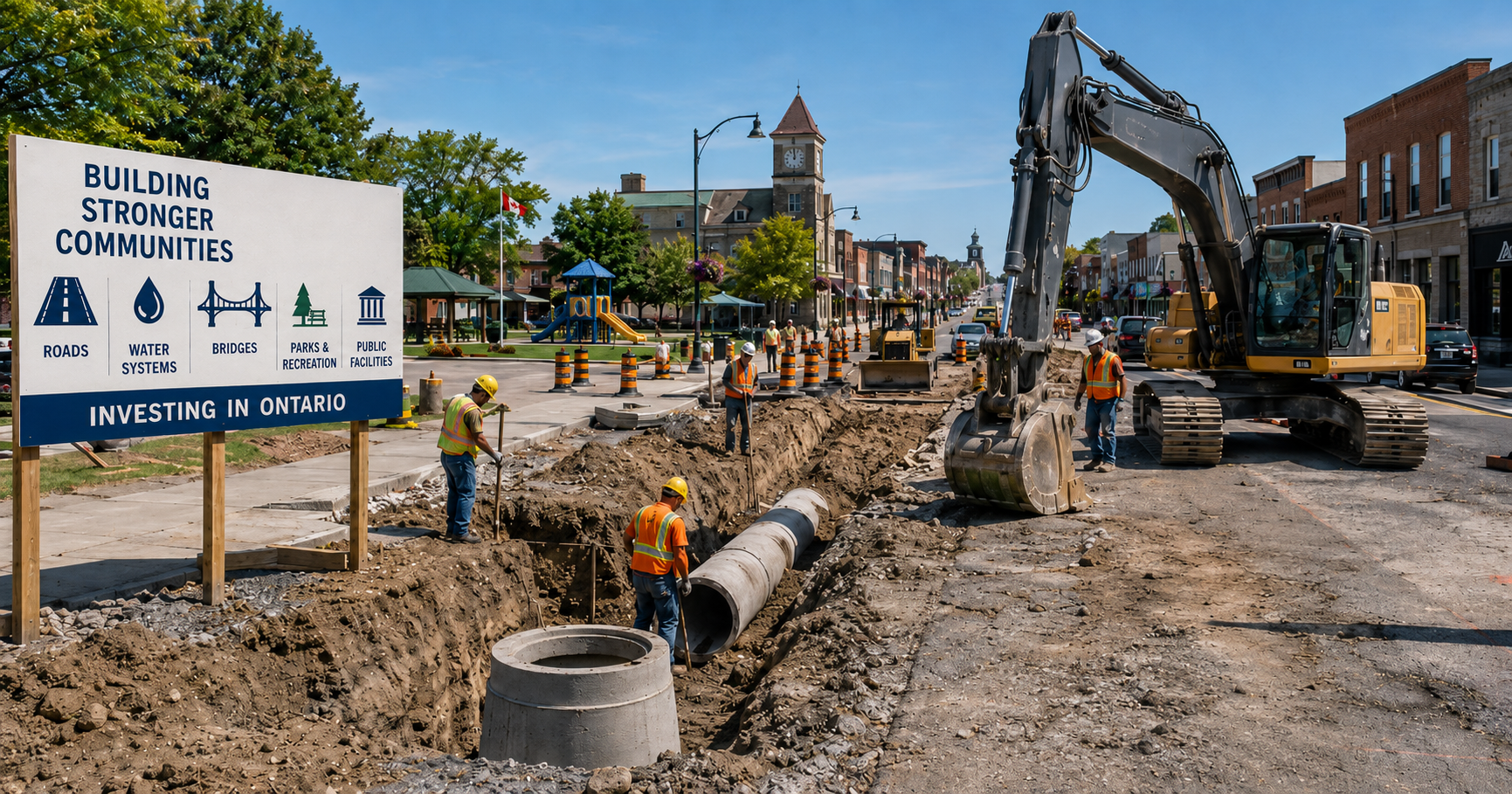
Ontario Municipal Work: How Contractors Can Stop Missing It
Ontario has a lot of municipal construction work.
Roads need repair. Bridges need attention. Water and wastewater systems need upgrades. Sidewalks, storm sewers, culverts, parks, parking lots, recreation facilities, public buildings, and local infrastructure all need contractors, trades, suppliers, and service providers.
The problem is not always that the work is hard to find because it's hidden.
The problem is that it's scattered.
One opportunity may be posted on a municipal website. Another may be on bids&tenders. Another may be through a regional purchasing portal. Another may be buried in a council agenda, capital plan, budget document, or future infrastructure program before it ever becomes a formal tender.
For Ontario contractors, that creates a real problem.
Good opportunities can be missed simply because no one had time to check every place they might appear.
The Work Is Out There
Ontario municipalities manage a huge amount of local infrastructure. That includes roads, bridges, water and wastewater systems, recreation facilities, public transit, housing, and other community assets.
On top of that, Ontario is investing heavily in infrastructure. The province’s 2026 budget includes a capital plan of more than $210 billion over 10 years, including highways, hospitals, transit, and community infrastructure.
That kind of investment matters to contractors.
It can create opportunities for general contractors, civil contractors, road builders, sitework contractors, underground utility firms, sub contractors like electrical contractors, mechanical contractors, concrete contractors, paving companies, landscaping firms, suppliers, trucking companies, and specialty trades.
But opportunity only helps if contractors see it early enough to act.
Why Municipal Work Gets Missed
Most contractors are not missing municipal work because they are lazy.
They are missing it because the process is messy.
Ontario has hundreds of municipalities, regions, counties, townships, school boards, agencies, and public owners. Many use online procurement systems. Some post through shared portals. Some maintain their own pages. Some require vendor registration. Some send alerts based on commodity codes. Some projects appear first in planning documents before they show up as tenders.
That means contractors often rely on a mix of:
Email alerts
Municipal websites
bids&tenders accounts
Ontario Tenders Portal
Regional purchasing portals
Plan rooms
Supplier tips
GC invites
Old relationships
Google searches
Word of mouth
That may work for some opportunities, but it is not a reliable system.
If the wrong commodity code is selected, an alert may not come through. If a vendor account is outdated, the contractor may miss a notice. If a municipality posts an addendum and the contractor is not registered properly, the risk gets worse. If no one checks the right site that week, a good job may come and go.
For a busy estimator or owner, that is frustrating.
For the company, it can be expensive.
Municipal Work Can Be a Great Fit
Local public work is worth watching because it often fits contractors who may not want to chase only the biggest provincial or private projects.
Municipal projects can include:
Road reconstruction
Watermain and sewer work
Stormwater improvements
Bridge and culvert repairs
Sidewalks and curbs
Parking lots
Recreation facilities
Public building upgrades
Traffic signals and streetlighting
Park improvements
Site servicing
Drainage work
For many contractors, these jobs are close to home, easier to understand, and better matched to their crews and equipment. A local paving job, sewer replacement, sidewalk program, building renovation, or park improvement may be a better fit than a larger project that stretches manpower, bonding, equipment, or cash flow.
But contractors need to know about the work early.
Waiting until the bid date is close creates pressure. Estimators rush. Suppliers rush. Subs rush. Addenda get missed. Site conditions do not get reviewed properly. Crews may already be committed somewhere else.
That is how a good opportunity becomes a bad bid.
A Better Way to Think About Municipal Opportunities
Contractors should not treat municipal work as a random list of tenders.
They should treat it like a pipeline.
That means tracking what is coming, what has been posted, what has changed, who is bidding, and which owners regularly release work that fits the company.
A stronger process should answer simple questions:
What municipal jobs are coming up in our area?
Which ones fit our crews, trades, and equipment?
Which owners release the same type of work every year?
Which opportunities need early supplier pricing?
Which jobs require bonding, prequalification, or special documentation?
Which projects are too small, too far, too risky, or too crowded?
Which addenda or updates changed the scope?
Which projects are worth tracking even if we are not bidding them today?
This is not about bidding everything.
It is about seeing enough of the market to make better decisions.
Subs and Suppliers Should Watch Municipal Work Too
Municipal work is not only for prime contractors.
Subcontractors and suppliers should also pay attention.
A road reconstruction job may create opportunities for traffic control, concrete, asphalt, aggregates, trucking, signage, striping, landscaping, lighting, sewer, watermain, testing, and restoration.
A recreation facility upgrade may involve mechanical, electrical, roofing, flooring, painting, concrete, doors, security, HVAC, and specialty trades.
A water or wastewater project may involve pipe suppliers, pump equipment, controls, electrical, excavation, concrete, and site restoration.
Waiting for a prime contractor to call during bid week is not always enough.
The earlier subs and suppliers know what is coming, the better they can build relationships, provide pricing support, manage inventory, and get in front of the right bidders.
Where DataBid Fits Into the Process
For Ontario contractors, the challenge is not just finding one tender.
The challenge is keeping up with many public and private opportunities across different municipalities, agencies, portals, and project stages without wasting hours every week.
That is where DataBid can help.
DataBid tracks Ontario construction opportunities, including municipal, civil, infrastructure, commercial, institutional, and private-sector projects. Contractors can follow projects, receive alerts when important updates are posted, review bidding activity when available, and track opportunities that match their market.
For a contractor, that means less time jumping from site to site and more time deciding which jobs are actually worth chasing.
It is not about bidding more work.
It is about finding better-fit opportunities earlier and staying ahead of changes before the bid date is too close.
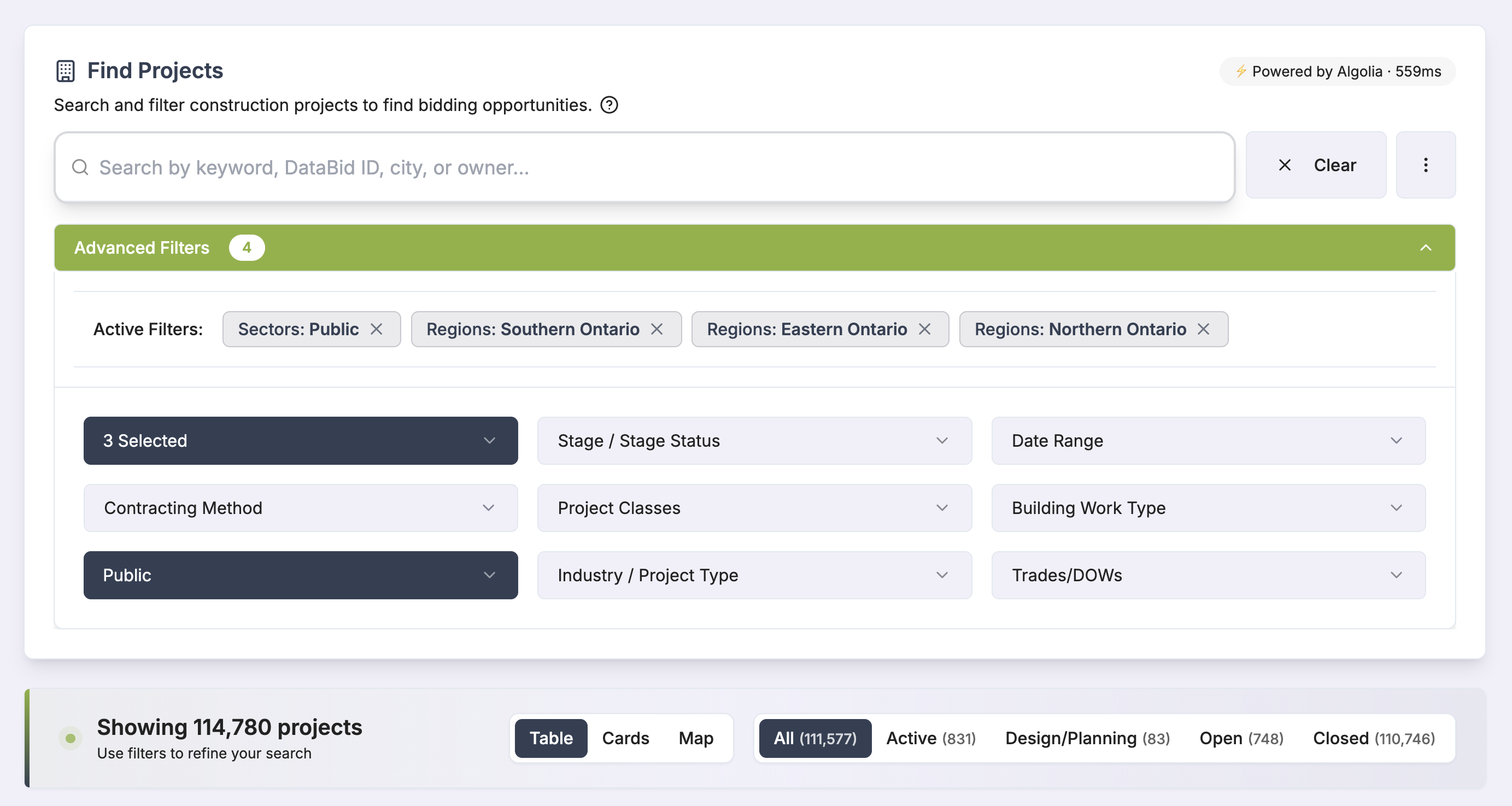 Example of an Ontario municipal project search inside DataBid. Project details include updates, bidding activity, and related contractor information.
The Bottom Line
Ontario municipal construction work is out there.
But it is scattered.
Contractors that rely only on inbox alerts, a few saved portals, or word of mouth are going to miss opportunities. Some of those missed jobs may have been a better fit than the ones they ended up bidding.
The companies that stay ahead will be the ones that track the market earlier, understand which owners release the right type of work, watch for updates, and protect their estimating time.
The goal is not to chase every municipal project in Ontario.
The goal is to find the right ones before they are old news.
Jim Lamelza
Founder & CEO