
7 Major Road Projects Transforming Bloomington-Normal
Illinois is continuing to push forward with critical infrastructure upgrades in the Bloomington-Normal region, with the Illinois Department of Transportation announcing a series of major projects under the Rebuild Illinois capital program.
With approximately $123 million allocated to seven roadway improvements, the initiative focuses on enhancing transportation corridors, addressing aging infrastructure, and improving overall traffic flow across one of Central Illinois’ growing regions. As Bloomington expands, the demand for reliable, high-capacity roadways continues to increase. What’s a reliable method to keep pace with that growth? Strategic resurfacing and reconstruction projects that extend roadway life while improving safety and efficiency.
Project Scope: Where the Investment Is Going
Central Illinois Proud reports that the seven projects are concentrated along key travel routes that serve both local and regional traffic. Each corridor plays a role in maintaining connectivity for commuters, freight movement, and daily transportation needs.
The projects include:
- Illinois 9 resurfacing west of Towanda Avenue and extending 2.2 miles east of Carnahan Drive
- Illinois 9 resurfacing from Hinshaw Avenue north to Locust Street, then east along Locust Street to Business U.S. Route 51
- Illinois 9 resurfacing from Main Street east along Empire Street to Towanda Avenue
- College Avenue reconstruction from U.S. Route 150 to White Oak Road in Normal
- Interstate 74 resurfacing from U.S. Route 51 to Le Roy
- Interstate 55 resurfacing from I-74 to Shirley, southwest of Bloomington
- Illinois 9 resurfacing eastbound from Towanda Avenue to Business U.S. Route 51
These projects are designed to improve some of the most heavily used corridors in the area, particularly Illinois Route 9 and the major interstate connections that support regional mobility.
Construction Timeline and Phasing
Project delivery is being phased over multiple years to balance construction efficiency with minimizing disruption to traffic.
- Three projects are expected to be completed by 2026
- Three additional projects are scheduled for completion in 2027
- The final project is anticipated to wrap up in 2028
This staggered timeline allows crews to maintain manageable work zones while ensuring that key routes remain operational throughout construction. It also provides flexibility for coordinating traffic control measures, detours, and seasonal construction schedules.
Construction Focus: Resurfacing vs. Reconstruction
While several projects involve resurfacing, others require more extensive reconstruction work. Understanding the difference is important when evaluating scope and construction complexity.
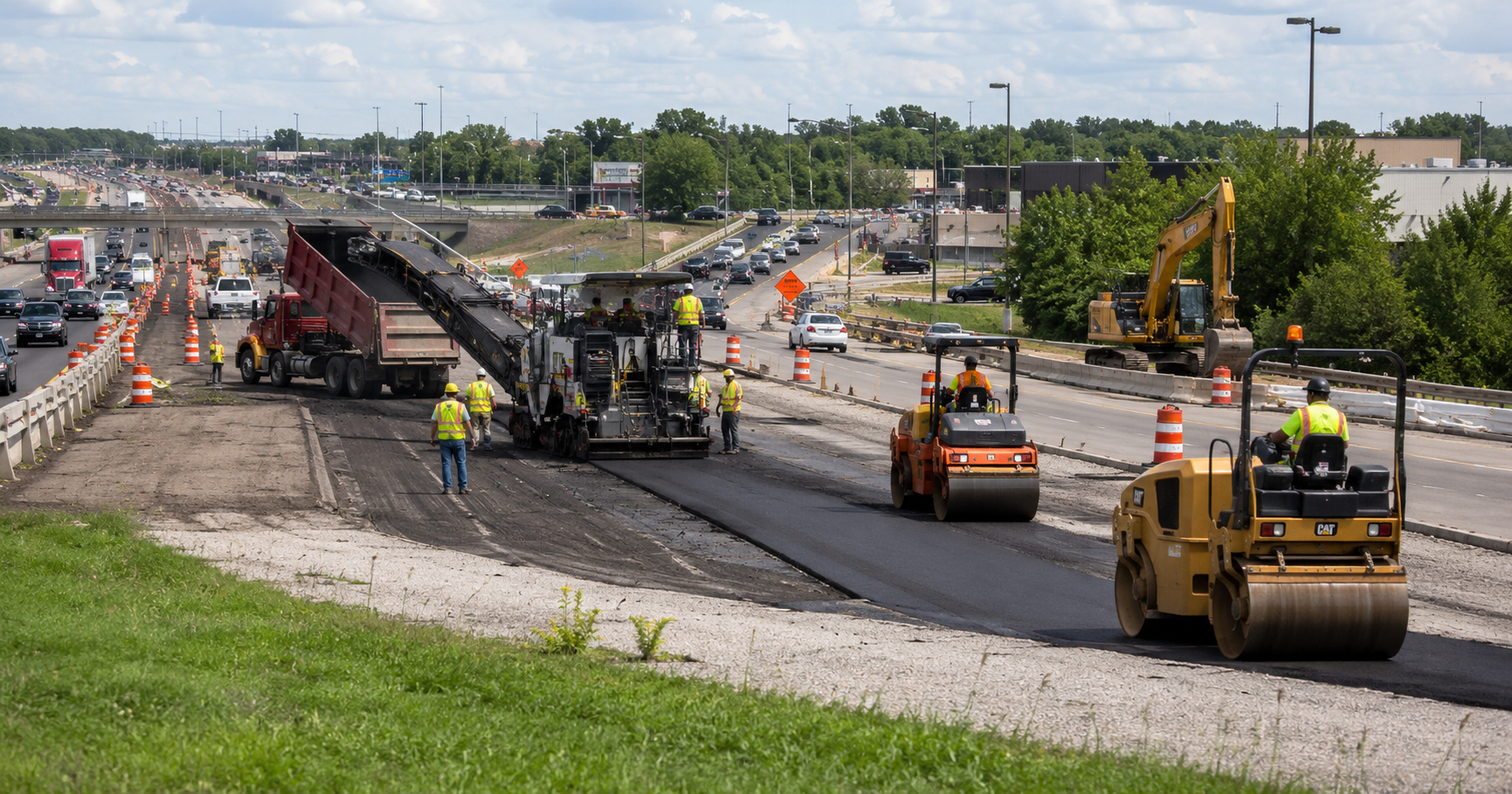
- Resurfacing projects focus on milling and replacing the top asphalt layers, restoring ride quality and extending pavement life
- Reconstruction projects, such as the College Avenue upgrade, involve deeper structural work, including base improvements, utility coordination, and full roadway rebuilding
In practical terms, resurfacing projects move faster and require less disruption, while reconstruction projects deliver longer-term durability and capacity improvements.
Key Construction Considerations
Executing multiple roadway projects across a single region requires careful coordination. Several construction elements are critical to success:
- Traffic management planning to maintain flow during peak hours
- Coordination with utility providers for underground infrastructure work
- Phased lane closures and detour routing to minimize congestion
- Pavement design adjustments based on traffic volumes and load demands
You can expect contractors to rely heavily on staged construction techniques, particularly along high-traffic corridors like I-55 and I-74, where maintaining throughput is essential.
Trades Involved in These Projects
A wide range of construction trades will be required to deliver these infrastructure upgrades efficiently:
- Heavy civil contractors
- Asphalt paving crews
- Concrete and roadway reconstruction specialists
- Surveying and layout teams
- Traffic control and safety crews
- Utility contractors (water, sewer, electrical coordination)
- Equipment operators and trucking services
Each trade plays a role in ensuring that work progresses safely and meets the design specifications required for long-term performance.
Why These Projects Matter for Construction Planning
For contractors, suppliers, and project stakeholders, this level of investment signals sustained demand in the transportation infrastructure sector. Multiple concurrent projects create opportunities for subcontractors, material suppliers, and workforce expansion.
From a planning perspective, projects like these highlight the importance of:
- Early procurement of materials such as asphalt and aggregates
- Workforce scheduling across overlapping job sites
- Coordination between public agencies and contractors
- Efficient sequencing of work to avoid costly delays
Momentum for Long-Term Infrastructure Growth
The Bloomington-Normal projects are part of the broader Rebuild Illinois initiative, which has already delivered approximately $24 billion in improvements across highways, bridges, and safety infrastructure statewide.
As construction activity ramps up across the region, these projects represent more than just short-term upgrades. They are part of a long-term strategy to modernize Illinois’ transportation network and support continued economic growth.
Closing Thoughts
With seven targeted projects and a $123 million investment, Bloomington-Normal is set to see meaningful improvements in roadway quality, traffic flow, and overall infrastructure performance.
If you’re involved in construction, now is the time to pay attention to how these projects are phased, bid, and executed. Opportunities are there for those ready to align with the scale and timing of public infrastructure work.
As Illinois continues to invest in its transportation systems, one thing is clear: well-planned infrastructure isn’t just maintenance, it’s the foundation for future growth.
Judy Lamelza
Editor-in-Chief